
7 Best Places to Walk and Discover Guangzhou, China

When people think of Guangzhou, they often picture Canton Tower, dim sum, and a huge modern city. But one of the best ways to understand Guangzhou is much simpler: walk through its neighborhoods.
A short walk can take you from ancient city history to traditional Cantonese architecture, from local food streets to quiet tree-lined lanes, and from the Pearl River waterfront to a futuristic skyline.
If you are visiting Guangzhou for the first time, here are 7 places worth exploring on foot—each offering a completely different side of the city.
1. Beijing Road — History Beneath Your Feet
Beijing Road is one of the best places to begin exploring Guangzhou's history. Today, it is a lively pedestrian shopping street filled with restaurants, shops and local snacks, but underneath the modern street are archaeological remains of Guangzhou's historic roads.
The area was an important part of the ancient city, and several historical sites are concentrated nearby. The Great Buddha Temple offers a striking contrast to the busy commercial street, while the Archaeological Site Museum of Nanyue Palace provides a deeper look into Guangzhou's history dating back more than 2,000 years.
Nearby highlights: Great Buddha Temple · Archaeological Site Museum of Nanyue Palace
Best for: First-time visitors, history, shopping and street food.
Tip: Beijing Road is particularly atmospheric in the evening, when the pedestrian area becomes lively with locals and visitors.

2. Yongqingfang & Shangxiajiu — Discover Old Guangzhou
If you want to experience the atmosphere of old Guangzhou, head to Yongqingfang and Shangxiajiu in Liwan District.
This is the heart of traditional Xiguan culture, known for its arcade buildings, Xiguan houses, narrow lanes, Cantonese food and traditional neighborhoods. Yongqingfang combines historic architecture with cafés, creative shops and contemporary cultural spaces, while Shangxiajiu remains one of Guangzhou's best-known traditional commercial streets.
The area is also a convenient starting point for exploring Shamian Island, a historic riverside area known for its European-style architecture and leafy streets.
Nearby highlights: Shamian Island · Lychee Bay · Cantonese Opera Art Museum
Best for: Traditional architecture, photography, Cantonese culture and food.
Tip: Don't rush through this area. Some of the most interesting details are found in the smaller lanes away from the main shopping streets.

3. Xihua Road — Where Locals Go to Eat
For a more everyday side of Guangzhou, spend some time around Xihua Road.
Unlike the city's major tourist streets, Xihua Road has a distinctly local atmosphere. Small restaurants, snack shops and neighborhood businesses line the streets, making it a good place to experience the food culture of Guangzhou without the feeling of being in a traditional tourist attraction.
After exploring the food scene, you can continue to the nearby Chen Clan Ancestral Hall, one of the city's most impressive examples of traditional Lingnan architecture. The hall is famous for its elaborate wood, stone, brick and ceramic carvings, and is now home to the Guangdong Folk Art Museum.
Nearby highlights: Chen Clan Ancestral Hall · Liwan
Best for: Local food, traditional architecture and everyday Guangzhou.
Tip: Come hungry. This is a neighborhood to explore through small bites rather than one big meal.

4. Dongshankou — Red-Brick Villas & Leafy Lanes
Dongshankou offers a completely different atmosphere.
Instead of crowded pedestrian streets, you will find quiet lanes shaded by trees, historic villas, red-brick buildings, cafés, independent boutiques and creative spaces.
It is one of the most enjoyable areas in Guangzhou for a relaxed afternoon walk. You can take your time exploring the residential streets, stop for coffee, browse small shops and simply enjoy the slower pace of the neighborhood.
For a break from the architecture, Dongshan Lake Park is nearby. The lake is one of Guangzhou's four major artificial lakes and is a popular urban leisure space.
Nearby highlights: Dongshan Lake Park
Best for: Architecture, cafés, photography and a slower pace.
Tip: Dongshankou is particularly enjoyable in the late afternoon, when the streets are cooler and the cafés begin to come alive.

5. Yanjiang West Road — A Walk Along the Pearl River
For a different perspective of Guangzhou, head toward Yanjiang West Road and the Pearl River waterfront.
This area combines the city's riverfront landscape with historic architecture and old urban landmarks. Walking along the river gives you a chance to see Guangzhou from a different angle, away from the shopping districts.
You can also connect your walk with nearby historic sites and continue toward Haizhu Bridge, Guangzhou's first bridge across the Pearl River, originally opened in 1933.
Nearby highlights: Sacred Heart Cathedral · Haizhu Bridge
Best for: Riverside walks, historic architecture and city views.
Tip: This is a particularly good area around sunset, when the light over the Pearl River changes the atmosphere of the city.

6. Tiyu Xilu — The Pulse of Modern Guangzhou
To experience Guangzhou's contemporary side, head to Tiyu Xilu (Tiyu West Road) in Tianhe.
This is a very different Guangzhou from the old neighborhoods of Liwan and Yuexiu. The area is surrounded by shopping malls, restaurants, cafés, offices and high-rise buildings, making it a great place to experience the city's modern urban lifestyle.
The wider Tianhe business district includes major shopping destinations such as Taikoo Hui, Grandview Mall and TeeMall, making it easy to combine a city walk with shopping and dining.
Nearby highlights: Taikoo Hui · Grandview Mall
Best for: Shopping, restaurants, cafés, nightlife and modern city life.
Tip: Come in the evening if you want to experience the energy of Guangzhou after work, when the streets and shopping areas become especially lively.
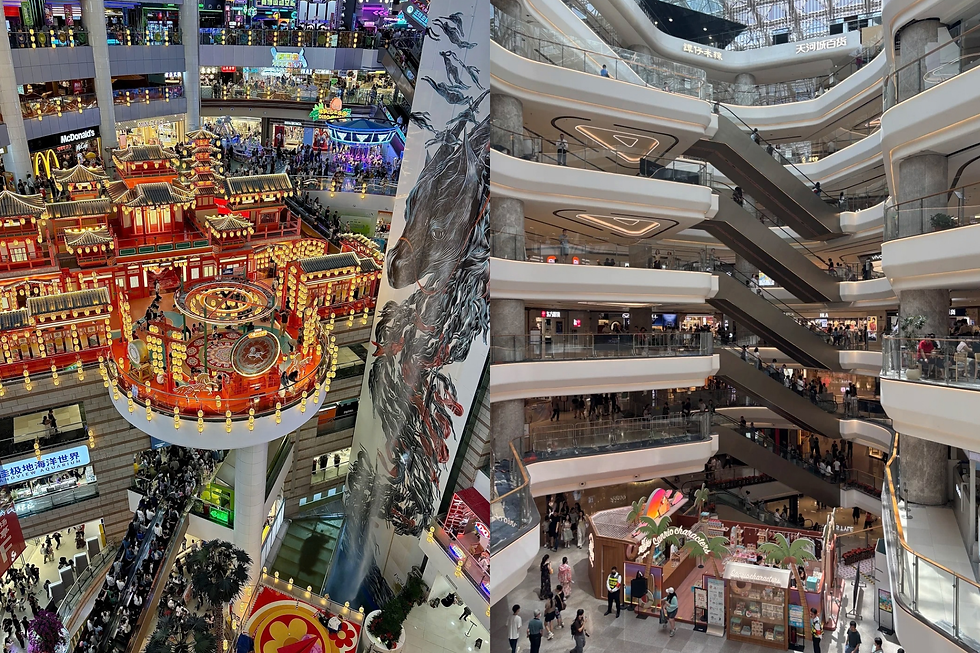
7. Zhujiang New Town — Guangzhou's Modern Skyline
For the iconic modern image of Guangzhou, finish your city walk in Zhujiang New Town.
Start around Canton Tower, cross Haixin Bridge, and continue toward Huacheng Square. The route brings together some of the city's most recognizable modern landmarks and offers impressive views of the Pearl River and surrounding skyscrapers.
Huacheng Square is at the center of Guangzhou's modern CBD, while the waterfront and pedestrian connections make this one of the city's most accessible areas for an evening walk. Guangzhou's official English naming standard lists Canton Tower and Huacheng Square among the city's official English place names.
Nearby highlights: Canton Tower · Haixin Bridge · Huacheng Square
Best for: Architecture, skyline views, photography and evening walks.
Tip: Visit around sunset and stay after dark. The transition from daylight to the illuminated city skyline is one of the highlights of this walk.

Which Guangzhou Walk Should You Choose?
The great thing about Guangzhou is that you don't have to choose between history and modernity—you can experience both within the same trip.
If you want... | Try... |
Ancient history & famous landmarks | Beijing Road |
Traditional Guangzhou & Lingnan culture | Yongqingfang & Shangxiajiu |
Local food & neighborhood life | Xihua Road |
Historic villas & cafés | Dongshankou |
Riverside scenery & historic buildings | Yanjiang West Road |
Shopping & modern city life | Tiyu Xilu |
Skyscrapers & spectacular city views | Zhujiang New Town |
How Many Days Do You Need?
You don't need a separate day for every neighborhood.
If you have one day in Guangzhou, you could focus on one historic route, such as:
Yongqingfang → Shangxiajiu → Shamian Island
Or choose a modern route:
Canton Tower → Haixin Bridge → Huacheng Square → Zhujiang New Town
With two days, you can combine the old and new sides of Guangzhou—for example, explore Liwan and Yuexiu during the day and experience the Pearl River skyline in the evening.
If you have more time, adding Dongshankou, Xihua Road or Tiyu Xilu allows you to experience a more local side of the city.
Ready to discover Guangzhou your way?
Click HERE to start planning your customized China journey with us.


Comments